CFDs are complex instruments and come with a high risk of losing money rapidly due to leverage. 76% of retail investor accounts lose money when trading CFDs with this provider. You should consider whether you understand how CFDs work and whether you can afford to take the high risk of losing your money.
CFDs are complex instruments and come with a high risk of losing money rapidly due to leverage. 76% of retail investor accounts lose money when trading CFDs with this provider. You should consider whether you understand how CFDs work and whether you can afford to take the high risk of losing your money.

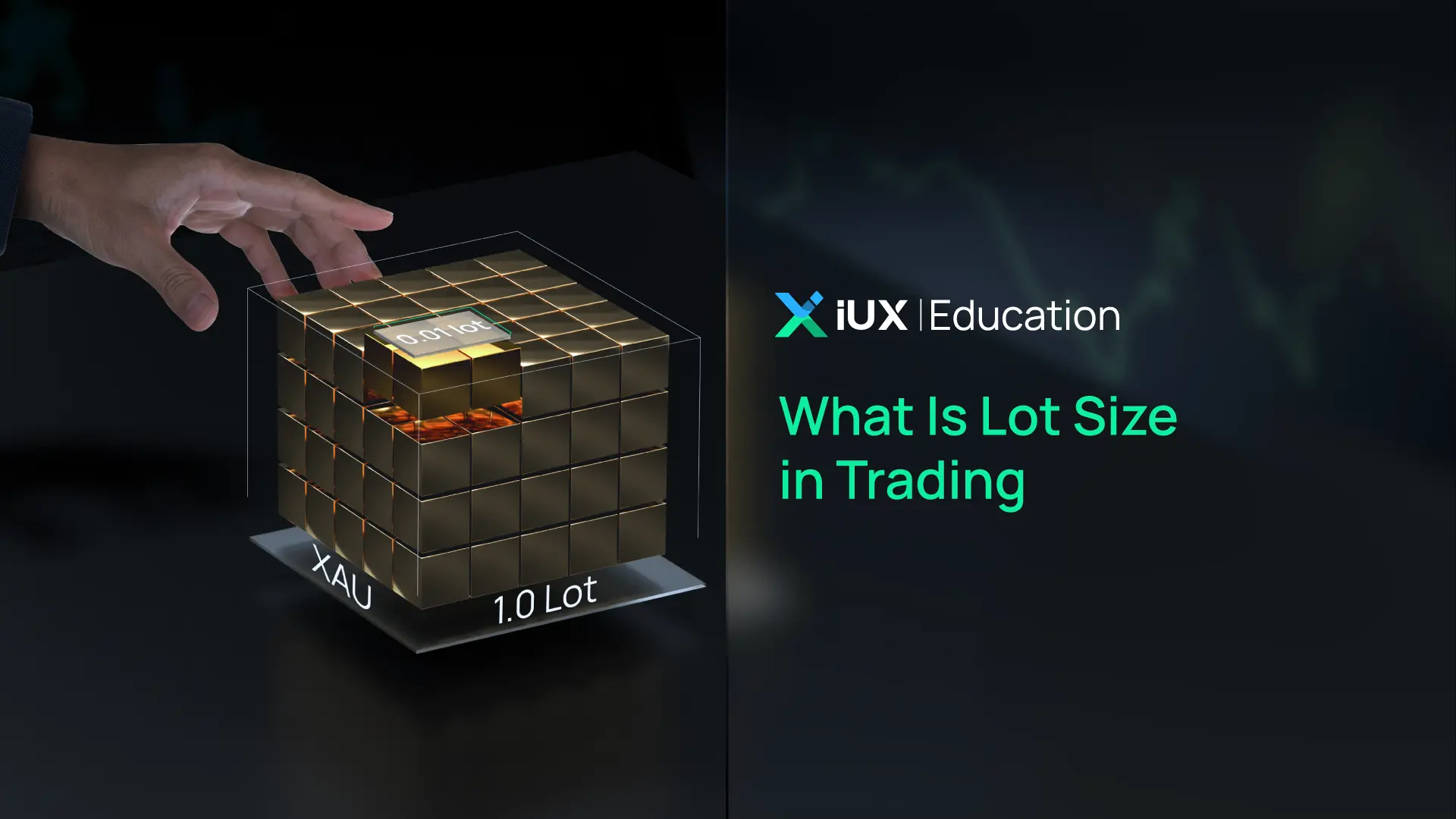
What Is Lot Size in Trading and How Do You Calculate It?
Discover what Lot Size means in trading, why it matters, and how to calculate it to understand trade volume and assess potential risk and position size.
Many newcomers to the world of Forex, gold, or even crypto trading may have come across the term “Lot Size.” It’s one of the fundamental concepts in trading, as it plays a crucial role in understanding trade volume, position size, and risk management.
What Is Lot Size?
Lot Size refers to the standardized unit used to define trade volume when trading CFDs (Contracts for Difference). Understanding Lot Size helps traders know the size of a position, estimate the potential impact of price movements, and consider margin requirements, especially when using leverage.
-
Trading Unit: A Lot is the unit used to measure trade volume in the market. For example, trading 1 Lot means you are buying or selling a predefined amount of the asset based on the system.
-
Contract Size: 1 Standard Lot equals 100,000 units of the base currency (the first currency in a pair). For example, in EUR/USD, 1 Lot = 100,000 euros.
-
Trade Volume Impact: The larger the Lot you trade, the greater the potential impact of each price movement on your account balance, including both potential gains and losses. That’s because each pip movement will have a greater effect on your account balance.
Find out which trading account suits your strategy at: Trading Accounts for All Types of Traders.
 |
Tip: A PIP is a unit of measurement used to express the change in value between two currencies. Generally, 1 pip = 0.0001. For example, if the EUR/USD moves from 1.1000 to 1.1001, that means the price has changed by 1 pip. |
Types of Lot Sizes in the Forex Market
In trading, traders can choose from different Lot Sizes depending on the trading instrument, account specifications, and other trading considerations. Lot sizes aren’t one-size-fits-all—they range from standard to very small units.
1. Standard Lot
= 100,000 units
Commonly used to represent a larger trade volume.
2. Mini Lot
= 10,000 units
Represents a smaller trade volume than a Standard Lot.
3. Micro Lot
= 1,000 units
Represents a smaller trade volume and may be available depending on account specifications.
4. Nano Lot
= 100 units
May be available in certain account types or trading environments, depending on the platform and account specifications.
Demo environments may be used to familiarise users with trading concepts, order functionality and risk-management tools, subject to the applicable account and trading conditions
Here is a comparison table showing examples of each Lot Size type when trading EUR/USD

Lot Sizes in Other Asset Classes
1 Lot of Gold (XAU/USD)
For illustration purposes only, assume the gold price is $3,384 per ounce and the Contract Size is 100 ounces:
1 Lot = 100 × $3,384 = $338,400
1 Lot of Oil (WTI)
For illustration purposes only, assume the WTI price is $76 per barrel and the Contract Size is 1,000 barrels:
1 Lot = 1,000 × $76 = $76,000
1 Lot of Stocks (e.g., Apple Inc.)
For illustration purposes only, assume AAPL is trading at $196.58 per share and the Contract Size is 100 shares:
1 Lot = 100 × $196.58 = $19,658

The Importance of Lot Size
Lot Size is an important consideration in trading — whether in Forex, gold, or stocks. Lot Size directly affects every aspect of risk management in your investment portfolio. The larger the Lot, the higher the pip value. This means even a small price movement can result in significant profit or loss.
Depending on the instrument, account structure and applicable margin requirements, a larger position may require greater margin and may increase exposure to adverse price movements. If Lot Size is not calculated carefully, it could contribute to a Margin Call.
Ultimately, proper risk management is essential. Lot Size can affect the level of exposure associated with a position, and its impact may vary depending on account size, trading conditions and the characteristics of the instrument.

1 Lot in gold trading equals 100 ounces of gold.
Calculating Lot Size
To accurately determine your Lot Size, many trading platforms offer a Lot Size Calculator that can help estimate trade size based on key inputs such as:
-
Portfolio size
-
Acceptable risk per trade (e.g., 1–2%)
-
Stop Loss distance
-
Currency pair being traded
Example Lot Size Formula:
Meaning of Variables in Lot Size Calculation
- Equity: The amount of money available in your trading account that can be used for placing trades.
- Risk Percentage (Risk %): The portion of your equity used in the calculation to estimate the amount that may be at risk on a single trade. For example, 2% risk means 0.02 in the formula.
- SL (Stop Loss): the distance in pips between an entry price and a specified stop-loss level, which may be used as part of an approach to managing potential losses.
- Pip Value: The monetary value of each pip movement in the currency pair you’re trading, which depends on the Lot Size and the specific pair.
Let’s apply the formula to calculate the Lot Size:
Plug in the numbers:
-
Equity = $10,000
-
Risk % = 2% = 0.02
-
Stop Loss = 30 pips
-
Pip Value = $10 (for Standard Lot)
The following calculation is a hypothetical mathematical illustration only and is not a recommendation of an appropriate position size, risk percentage or trading approach.
Summary
Lot Size is not just a number you enter before placing a trade—it’s the core of proper risk management. Choosing the wrong size, even by a small amount, can add unnecessary risk to your portfolio. Understanding Lot Size can help explain how trade volume, price movements and potential exposure interact in different trading scenarios.
💡FAQs
Q1. How much is 1 Lot in Forex trading in USD?
For many Forex instruments, a Standard Lot is commonly defined as 100,000 units of the base currency, although contract specifications may vary by instrument and provider.
For example, in EUR/USD, 1 Lot = 100,000 EUR.
If the exchange rate is 1.10, 100,000 EUR is equivalent to 110,000 USD.
Q2. What is the formula to calculate Lot Size?
Lot Size = (Amount to Risk ÷ Stop Loss in Pips) ÷ Pip Value
Q3. How do you calculate Pip Value?
For pairs where USD is the quote currency, such as EUR/USD or GBP/USD:
Pip Value = Pip Size × Number of Units
For USD-base pairs, such as USD/CAD or USD/CHF:
Pip Value = (Pip Size × Number of Units) ÷ Exchange Rate
Pip Size is generally 0.0001 for most currency pairs and 0.01 for JPY pairs.
Note: CFDs are complex instruments and come with a high risk of losing money rapidly due to leverage. 76% of retail investor accounts lose money when trading CFDs with this provider. You should consider whether you understand how CFDs work and whether you can afford to take the high risk of losing your money. This marketing publication is for informational and educational purposes only. It is not an investment recommendation. We do not suggest any investment strategy in this material, nor do we provide investment advice. The material does not take into account your individual financial situation, needs, or investment objectives. It does not constitute a solicitation or invitation to buy, sell, or engage with any product or service of IUX. We have prepared this marketing publication carefully and objectively. We present the facts known to the authors at the time of its creation. We do not include any judgmental elements. Information and research based on historical data or results, as well as forecasts, are not a reliable indicator of the future. We are not responsible for your actions or omissions, especially if you decide to purchase or sell financial instruments based on the information in this marketing publication. We are also not liable for any damages that may result from the direct or indirect use of this information. Investing is risky. Invest responsibly.